Fall Prevention for Parkinson’s: Protecting Seniors at Harbour's Edge
For older adults and their families, fall prevention for Parkinson’s is often one of the most urgent concerns. Parkinson’s disease can affect balance, strength, and reaction time, making falls more likely and recovery more complicated. Understanding why Parkinson’s increases fall risk and what can be done about it is essential to keeping seniors as safe and independent as possible.
Harbour's Edge is a waterfront Life Care community in Delray Beach, FL, that offers on-site skilled nursing, short‑term rehabilitation, and other health services. For families seeking Parkinson’s care in Delray Beach, FL, the community’s clinically focused environment and access to rehabilitation services can play an important role in lowering fall risk and supporting recovery if a fall does occur.
Why Parkinson’s Increases Fall Risk
Parkinson’s disease affects the parts of the brain that help coordinate movement and balance. Over time, this can lead to:
- Slower movement and difficulty starting or stopping motion
- Shuffling gait and shorter steps
- Reduced arm swing, which affects balance
- Freezing episodes when beginning to walk or turning
- Muscle stiffness that makes it harder to adjust to uneven surfaces
These changes make it easier to trip over small obstacles, misjudge distances, or lose balance during everyday activities. Falls can result in fractures, head injuries, or hospital stays, which may further reduce mobility and independence.
Common Situations Where Falls Happen
For seniors living with Parkinson’s, falls often occur:
- When getting in or out of bed or chairs
- In the bathroom, especially when stepping into or out of the shower
- When turning quickly or changing direction
- On uneven surfaces or when rushing
- At night, when lighting may be poor and medications may be wearing off
Recognizing these high‑risk situations is the first step in implementing effective fall‑prevention strategies.
Environmental Changes That Support Fall Prevention
Simple environmental adjustments can significantly reduce fall risk. These changes may include:
- Removing throw rugs and clutter from walking paths
- Improving lighting, especially in hallways and bathrooms
- Adding grab bars near toilets and in showers
- Using nonslip mats and appropriate footwear
- Ensuring chairs and beds are at appropriate heights for safe transfers
In a skilled nursing and rehabilitation environment like the one at Harbour's Edge, many of these safety features are already built into resident rooms and common spaces. This can make the environment inherently safer than a typical home, especially for someone with significant balance problems.
The Role of Therapy in Fall Prevention at Harbour's Edge
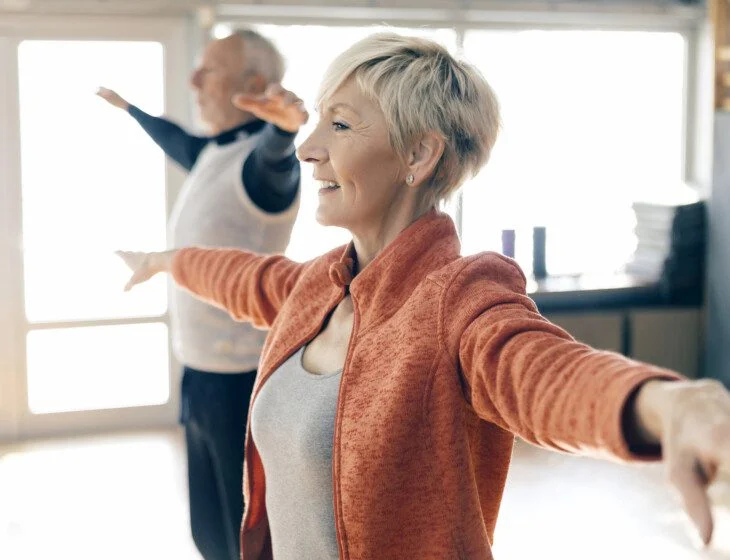
Fall prevention exercises for Parkinson’s often involve physical, occupational, and sometimes speech therapy. In a skilled nursing and rehab setting, therapists can:
- Assess balance, gait, and transfer techniques
- Develop individualized exercise programs to build strength and stability
- Teach strategies for managing freezing episodes or navigating tight spaces
- Work with residents on safe ways to stand, sit, and move around their environment
At Harbour's Edge, rehabilitation services are available on-site, which can be especially helpful after a hospital stay or an injury. Having therapists, nurses, and caregivers under one roof enables coordinated fall‑prevention plans reinforced throughout the day. Harbour’s Edge also provides home care services in your apartment allowing for an extra level of support to assist with preventing falls.
Nursing Oversight and Ongoing Monitoring
In addition to environmental changes and therapy, nursing oversight is a key part of fall prevention for Parkinson’s in a skilled nursing setting. Nurses and nursing assistants can:
- Monitor how medications are affecting mobility and alert physicians to concerns
- Watch for patterns in falls or near‑falls and adjust care plans accordingly
- Provide hands‑on assistance with transfers and walking when needed
- Educate residents and families about safe movement techniques
This level of monitoring is difficult to replicate at home, especially if family caregivers are balancing other responsibilities.
When Families in Delray Beach Might Consider Skilled Nursing or Rehab
Families may want to explore skilled nursing or short‑term rehabilitation at Harbour's Edge when they notice:
- Repeated falls or close calls, even after making home safety changes
- Increasing difficulty with transfers or walking, leading to more assistance needs
- A recent hospital stay related to a fall, fracture, or other Parkinson’s‑related complication
- Care needs that are becoming physically or emotionally overwhelming for family caregivers
A short‑term rehab stay may help after a specific event, while long‑term skilled nursing could be appropriate if fall risk and care needs remain high.
As our community continues to grow, we plan to offer assisted living and memory care services at the same location. This way, we can help all our patients, no matter their needs.
Working with Harbour's Edge to Reduce Fall Risk
If you are concerned about falls for a loved one living with Parkinson’s, the team at Harbour's Edge can help you understand available options, including short‑term rehabilitation and long‑term skilled nursing. They can explain how therapy, nursing care, and environmental design work together to support fall prevention and how care plans are tailored to each individual’s needs and goals.
Important Note About Medical Advice
This article is intended for educational purposes only and is not a substitute for professional medical advice, diagnosis, or treatment. Always consult a physician, neurologist, or other qualified health provider with questions about Parkinson’s disease, fall risk, or changes in symptoms.